
This is part II in a multi-part series exploring the youth and adolescence of Robert Stanton, former Director of the National Park Service and the first director of color, and how the context of his early years informed his tenure atop the NPS. You can find part I here, part III here, part IV here, and part V here.
The elementary school was in a state of decrepitude. Stanton enjoyed learning and was a good student, notwithstanding the abysmal state of the school. Mosier Valley Elementary was a one-story, two-room, wood-framed building. Windows were shattered, the bathroom was a mere outhouse, educational equipment was severely lacking, and students received books and other supplies as hand-me-downs from the all-white Euless school.[1]
In Euless, TX, just a few miles down the road, white residents had for years invested care and resources into their school. In 1914 the Euless School was built, composed of six classrooms and an auditorium. Indoor plumbing and electricity were installed after 1932. In the 1935, in the depths of the Great Depression, Euless voted to approve an $8,000 bond to construct a white brick building with three additional classrooms, a library, and a superintendent’s office.[2]
The Mosier Valley School and Euless School were in the same district and by law the conditions of both schools were supposed to be equal. Separate but equal. However, the all-white school board neglected the Mossier Valley School for decades. Instead of approving funds to revitalize the Mosier Valley School, the board pursued the cheaper option of bussing students dozens of miles to Fort Worth. White Euless parents argued that Black Mosier Valley parents showed little interest in improving their own school and had allowed it to become vandalized and ruined. A proposed $25,000 bond to upgrade the school was easily defeated: 57 in favor, 101 against.[3]

Black parents, refusing to submit to the bussing plan (discussions of which they were kept out of), decided to organize. At the beginning of the school year, Stanton’s parents and others made their case in a peaceful demonstration. Stanton was on the verge of turning 10-years old and he would carry the memory of the protest with him long into adulthood.
Around 8 a.m. on the morning of Tuesday, September 5, 1950, Dr. George D. Flemmings, president of the Fort Worth branch of the National Association for the Advancement of Colored People (NAACP), and Donald Jones, a Dallas NAACP leader, mobilized a group of 40 parents to the Euless School. Flemmings, Jones, and the group of parents demanded the all-white Euless School enroll their children, knowing they would be turned away but hoping at least to draw attention to the state of the Mosier Valley School. Euless Principal O.B. Powell was tipped off on Saturday about the upcoming Tuesday rally and he “conferred with school board members.”[4] It’s unclear what exactly they discussed but the Euless community was able to assemble a sizable counter-protest of about 150 white people. Some were armed.
News media downplayed the tenor of the counter-protest, noting its strength in numbers but understating its potential for combustion. Phrases like “a tense moment” and “only one bit of violence” and “the only violence was directed toward photographers” characterized the event as generally mild; reporters wrote that “a young Negro photographer was relieved of his camera” and “cameras later were returned unharmed.” The message here was that it could have been much worse and that white counter-protesters acted with relative restraint.[5]

Billy Lee Byers, a lifelong Euless resident born in 1927, remembered “everybody got their guns and went down there to the Euless School and it was a lot of pandemonium… They probably herded them in the auditorium and somebody wanted to burn it down.” William Samuel Gay, Jr., a teacher at the Euless School and WWII veteran, was more blunt: “I was scared to death. Even though I had been in the service flying bomber missions in the Pacific… the [Euless] men and women down here with the shotguns… that was really something. That was an experience. I thought I was back fighting the Japanese.”[6]
Newspapers reported that an unidentified man struck photographer Gene Gordon of the Fort Worth Press; David Massey, a lifelong resident of Euless, identified that person as none other than Principal Powell.[7] Beatrice Parker Green said Powell at one point even brandished a pistol. But in the face of mob violence, the Mosier Valley parents stood in solidarity. “We were just as brave as anything. I went with my nephew, we faced them, it was all that noise,” said Green.[8]
Powell addressed the Mosier Valley parents, placating them while at the same time reaffirming segregation. “All we can do is try as fast as possible to make the two facilities equal, not undertake to combine them,” he said. While Powell spoke with the parents, Superintendent S.W. Mills called a federal judge to ask how to proceed. The judge had ruled back in June that the Euless School Board was required to provide equal facilities for Black students instead of bussing them to Fort Worth. But the judge washed his hands of the incident, saying “I have nothing to do with it.”[9]
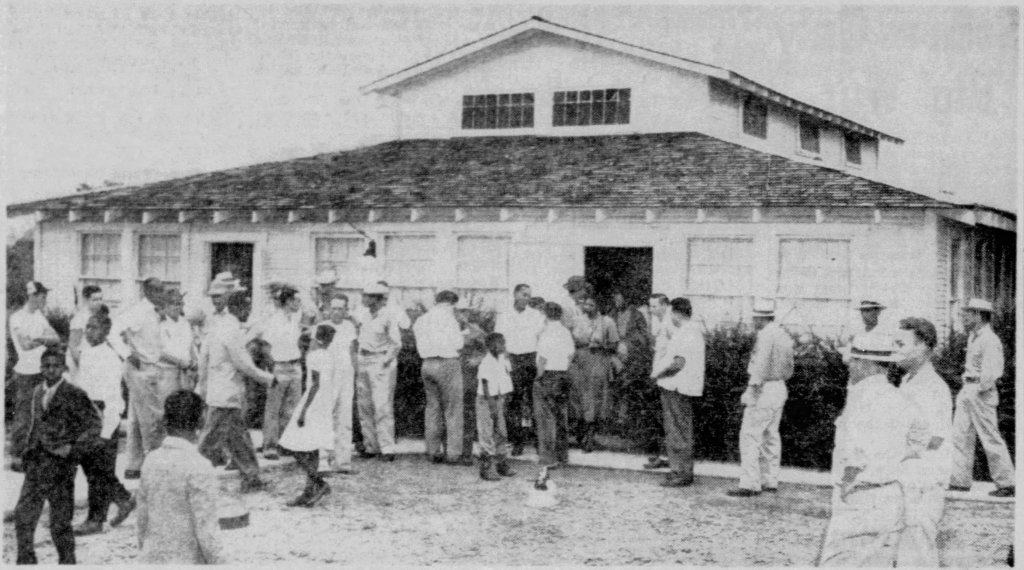
Before the Mosier Valley parents adjourned, Jones announced that the NAACP would file suit against the school district for violation of the separate but equal clause. The parents and the NAACP won out, and a new school for Mosier Valley was ordered and built, and in 1954 it even hosted an open house.[10] Integration, though, would not occur in the school district until 1969.
As a student prior to the protest, Stanton earned good grades and was well-regarded among his teachers; however, being young and accustomed to the insulated way of life in rural Texas, Stanton hadn’t done much in the way of forward thinking. There was nothing in particular he wanted do when he grew up other than abide by the lofty ideals of being a good citizen, a good provider, and a good Christian in the model of his parents.
He remembered decades later the names of the NAACP attorneys who helped the Mosier Valley parents navigate the legal system and achieve a new elementary school. The ordeal heightened his sensitivity and awareness about segregation and the obstacles it presented for Black people who wanted a higher quality of life.[11] It gave Stanton a clearer light to see a potential future doing good for others. It helped set him on a new path that was only then taking shape: public service and youth empowerment. He said:
“It did reinforce a couple of things: one is that I wanted to continue to pursue my education in spite of those difficulties, but also I really respected the courage of the parents who were willing to risk all for the educational development of their children. I guess it really started manifesting into a passion that I’ve had all along that has been reflected in my own activities in the National Park Service.”[12]
[1] On lack of restrooms, see: William Samuel Gay, Jr., interviewed by Ofa Faiva-Siale, November 9, 2011, transcript, Euless Historical Preservation Committee.
https://www.eulesstx.gov/community/history/oral-history-narratives/william-samuel-gay-jr; On books, Beatrice Parker Green said: “So we got the books when we…some of them were good books and some of them wasn’t, whatever was left over from Euless, that’s what they brought up here… a black man done always brought the books; just put them in the back of a wagon and brought ‘em…” (See: Parker Green, interviewed by Dan Clark.); “Negro Students Return to Own School After Protest,” The Victoria Advocate, September 6, 1950, 10.
[2] On Construction, plumbing and electricity, see: Euless School. Euless Schools, Euless Historical Preservation Committee, Euless, Texas, November 10, 2009.
[3] “Negroes Demand Entrance in White School at Euless.” Fort Worth Star-Telegram. Fort Worth, Texas. September 5, 1050, 217th ed. 1,4. https://www.newspapers.com/image/636722420; “Negroes’ Attempt To Enroll In Tarrant School Causes Tension.” Lubbock Morning Avalanche. Lubbock, Texas. September 6, 1950. 4. Sec. II. 10. https://newspaperarchive.com/morning-avalanche-sep-06-1950-p-14/; “Rejected Texas Negro Students Start Classes in Own Building.” The Abilene Reporter-News. Abilene, Texas. September 6, 1950, Vol LXX. No 81, 38. https://newspaperarchive.com/abilene-reporter-news-sep-06-1950-p-38/; “Negro Students Return to Own School After Protest.” The Victoria Advocate. Victoria, Texas. September 6, 1950. 10; Tina Nicole Cannon, “Cowtown and the Color Line: Desegregating Fort Worth’s Public Schools,” PhD diss., Texas Christian University, 2009. https://repository.tcu.edu/bitstream/handle/116099117/4129/Cannon.pdf?sequence=1&isAllowed=y/.
[4] Fort Worth Star-Telegram, Sept 5, 1950, p.1
[5] Fort Worth Star-Telegram, Sept 5, 1950, p. 1; Morning Avalanche, Sept 6, 1950, p. 14; Corsicana Daily Sun, Sept 6, 1950, p. 10; Abilene Reporter-News, Sept 6, 1950, p. 38; Victoria Advocate, Sept 6, 1950 p. 10.
[6] Billy Byers, Interviewed by Betty Fuller and Ofa Faiva-Siale, October 5, 2012, in Euless, Texas. Transcript. Euless Historical Preservation Committee. https://www.eulesstx.gov/community/history/oral-history-narratives/bill-byers; William Gay, Jr., interviewed by Ofa Faiva-Siale. November 9, 2011. Transcript. Euless Historical Preservation Committee. https://www.eulesstx.gov/community/history/oral-history-narratives/william-samuel-gay-jr.
[7] Margie Neely Massey, interviewed by Betty Fuller and David Massey. January 27, 2006, in Euless, Texas. Transcript, Euless Historical Preservation Committee, https://www.eulesstx.gov/community/history/oral-history-narratives/margie-neely-massey.
[8] Parker Green, interviewed by Dan Clark.
[9] Fort Worth Star-Telegram, Sept 6, 1950, p. 4.
[10] “Open House at Mosier Valley.” Fort Worth Star-Telegram. Fort Worth, Texas. March 27, 1954,10.
[11] Stanton, interviewed by Hamilton, session 2, tape 1, story 12.
[12] Stanton, interviewed by McDonnell, p. 2.
 The Sketch Book of Nick DeLuca
Leave a comment