
I’m glad the public has been debating whether to rename Faneuil Hall in Boston. It’s opened difficult discussions about the hall’s and the city’s historical connections to slavery. And while there’s been little movement on the issue since the Boston City Council approved a non-binding resolution back in October 2023 in favor of a renaming, I’ve been thinking to myself after another season at the National Parks of Boston: if it comes to it, what should we rename Faneuil Hall?
In that circumstance we should rename Faneuil Hall after a larger, unifying concept or idea, not a person.
Bostonians named Faneuil Hall for the 18th century Boston merchant Peter Faneuil. Faneuil’s international trade network operated in harmony with the institution of slavery. He exported commodities like salted fish and refined sugar products. In turn, trade partners trafficked enslaved Africans. He also owned stakes in slave ships and enslaved people for his own private household.[1] Though these connections to slavery are problematic to us today, they weighed little on Bostonians’ minds in Faneuil’s time.
In 1740, Faneuil offered to build and donate to the town a centralized community space. This elegant brick structure included a ground-level marketplace and second-floor public meeting hall. But Faneuil died before it was complete. When the building opened in 1742, Bostonians voted to name it after Faneuil. They wanted posterity to forever remember his civic engagement, good nature, and generous spirit.
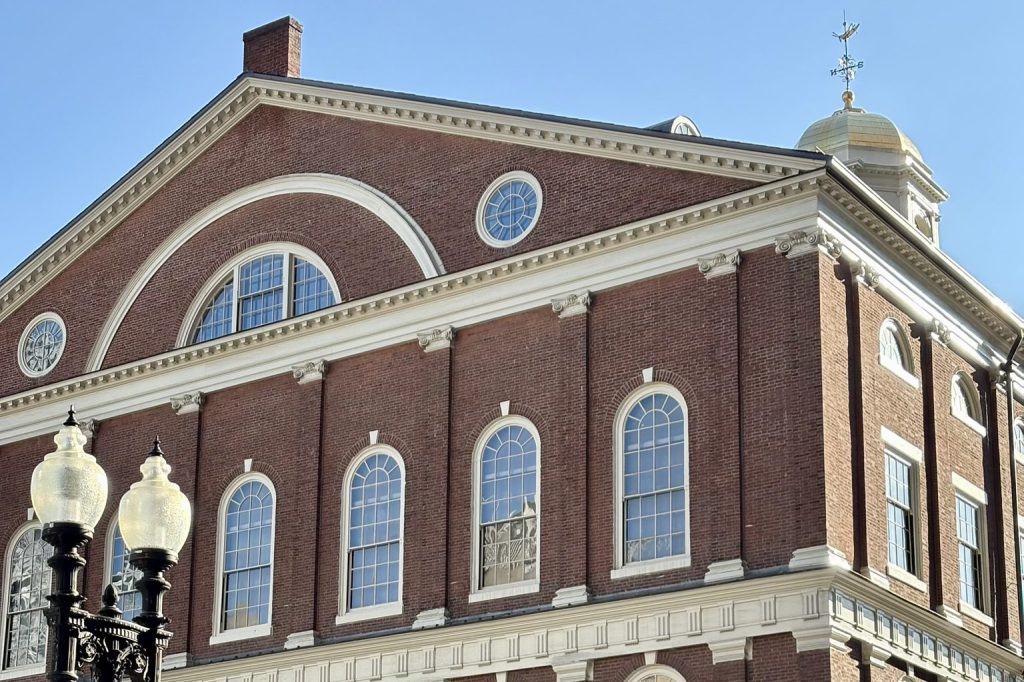

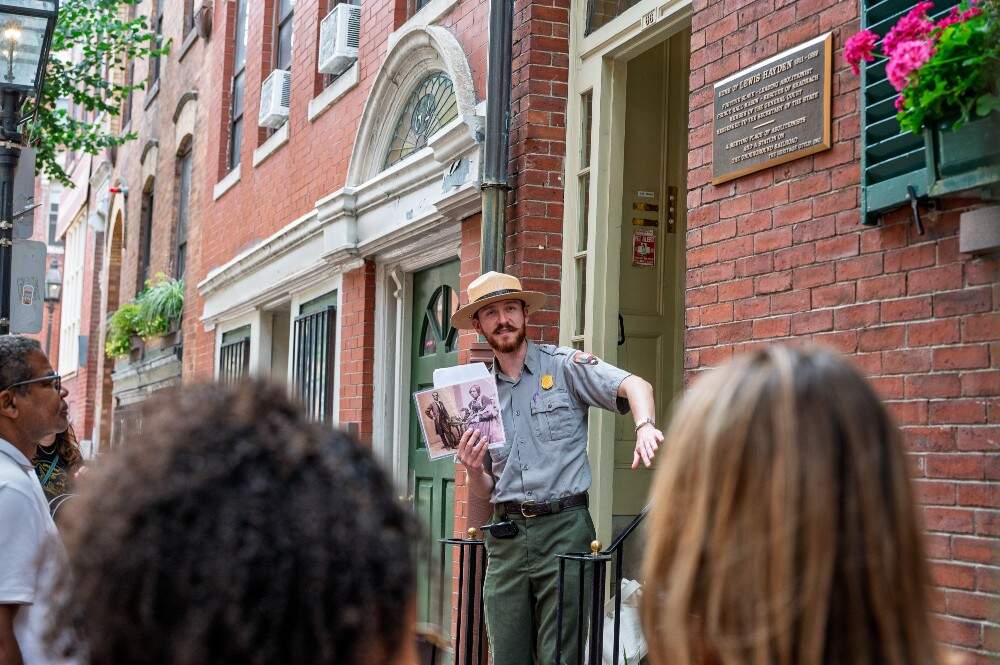
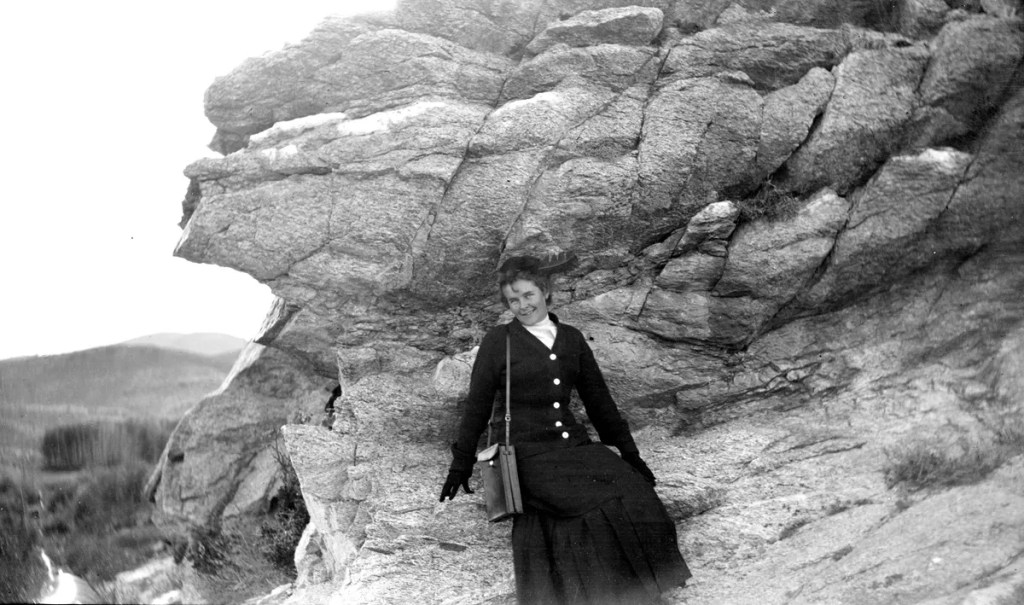
The power of giving offered Faneuil a pathway to great public esteem. Faneuil crystallized his reputation as a generous Boston gentleman through his civic and religious donations. By spreading his wealth around, he attached his name to socio-political institutions and solidified his own legacy.[2] Faneuil’s associations with giving, and thus traits like benevolence and selflessness, took root in the minds of Bostonians in 1742. His associations to slavery did not. More meaningful to Bostonians than how Faneuil amassed his fortune was how he dispensed it.
The characteristics Bostonians admired in the 1700s are different than those we admire today. Renaming Faneuil Hall after another person may please some at the present but may create more problems for the future. If Boston does rename Faneuil Hall, it shouldn’t be named after someone else.
Instead, the historical record offers us examples of place names of civic buildings not unlike Faneuil Hall. These place names represent groups of people instead of an individual, exude American institutional values, and give us cause to aspire.
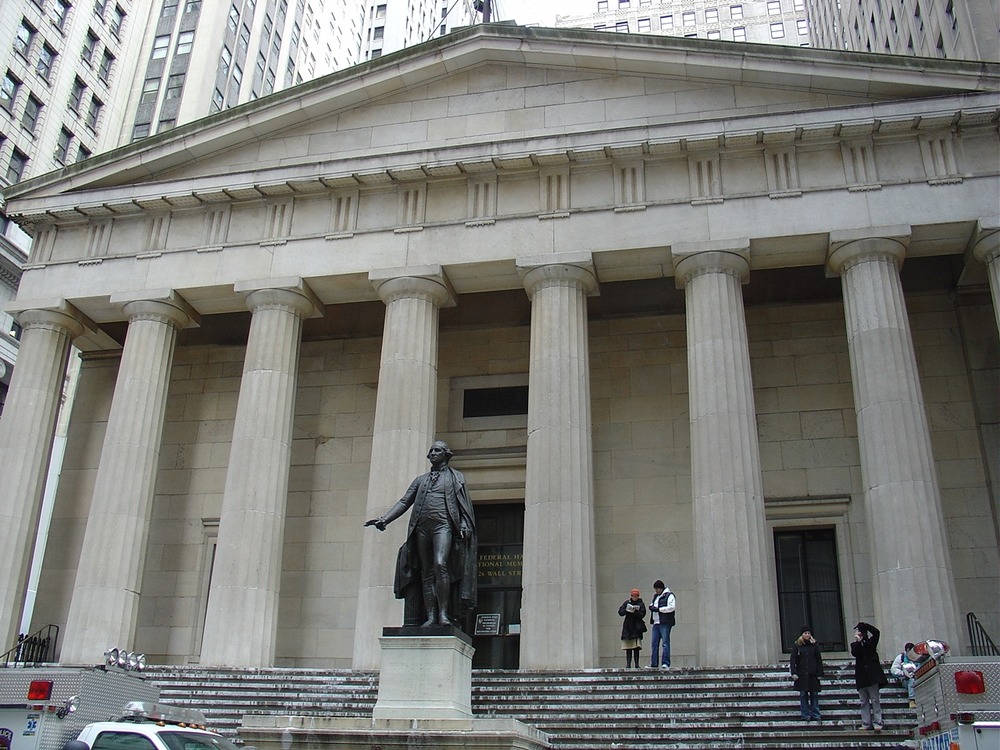
Two go all the way back to the creation of the United States. The new federal government under the US Constitution first convened at New York City’s City Hall. It was a natural site as it previously hosted the Confederation Congress. In 1789 George Washington took the oath of office on the second-floor balcony of the building. The 1st US congress assembled inside and here drafted the Bill of Rights. To entice the government to remain seated at New York and to project pride and confidence in the new Constitution, New York City remodeled City Hall in the emerging American style of the day and renamed it Federal Hall.



In Pennsylvania, the State House in Philadelphia was crucial to the American Revolutionary cause. The Second Continental Congress gathered here. Revolutionaries adopted the Declaration of Independence here. Americans ratified the US Constitution here. But Americans didn’t refer to the State House as Independence Hall until the 19th century. In 1824 the Marquis de Lafayette visited the State House as part of his grand tour of America. To prepare for Lafayette, Philadelphia repaired the hall and adorned it with elaborate decorations. The event emphasized the site’s role in achieving American independence. They called it the Hall of Independence — later simplified to Independence Hall.
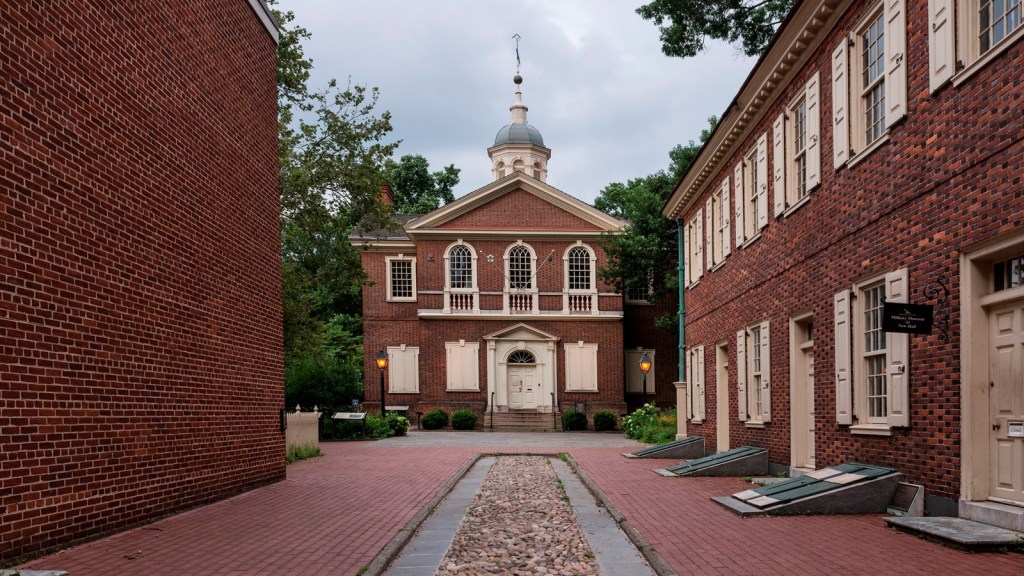
The last two examples I have are named after groups of people dedicated to spreading knowledge. Carpenters’ Hall in Philadelphia and Mechanics Hall in Worcester. Like Faneuil Hall, these two sites are named for the people who constructed them. Unlike Faneuil Hall they are named for groups of people, not any sole person.
The Carpenters’ Company of Philadelphia built Carpenters’ Hall in 1773 and named it for themselves, an order of master carpenters similar to medieval guilds. Carpenters’ Hall hosted its share of activity during the Revolution, but the Company didn’t rename the hall when the country began like New Yorkers did with City Hall. They kept the original name. It’s a name that invokes 18th century craft and construction, fraternal and professional organizations, and the life everyday people of the past. Implied in this place name is a sense of collective improvement, of community.
Mechanics Hall in Worcester is similar. The Worcester County Mechanics Association built their eponymous hall in 1857. The Association used the hall to promote technical and industrial opportunities. They operated a trade lending library. They also hosted orators, authors, advocates, and musicians. Implicit in the name of this hall is the Mechanics’ goal of educational advancement in science, technology, and the arts.
People named these sites for ideas bigger than any one person. The historical threads that braid these sites together are self-determination, community empowerment, and societal reform. The history of Faneuil Hall is dyed in these same thematic colors. Faneuil Hall was essential to causes and movements like the American Revolution, abolitionism, women’s suffrage, civil rights, LGBT rights, antiwar protests, and much more. If Boston decides to rename Faneuil Hall, it could find plenty of inspiration in the many causes at which it’s been at the very center.
[1] One of Faneuil’s better known slave ships was called the Jolly Batchelor. Anchored in the Sierra Leone River in 1742 on a mission to capture, enslave, and sell Africans, the Jolly Batchelor underwent a revolt. Africans and captives killed the captain and two crew members, stripped the vessel of its valuables and abandoned it. Other crew members eventually recovered the ship and more than 30 captives, 20 of whom were transported to and sold at Newport, RI.
[2] Faneuil was also a financial supporter of Trinity Church and King’s Chapel.


 The Sketch Book of Nick DeLuca
Leave a comment