This is part IV in a multi-part series exploring the youth and adolescence of Robert Stanton, former Director of the National Park Service and the first director of color, and how the context of his early years informed his tenure atop the NPS. You can read part I here, part II here, part III here, and part V here.
The parents of Mosier Valley may have succeeded in compelling the local school district to build new facilities for the elementary school students, but junior high and high school students were still made to suffer the indignity and inconvenience of bussing. When Bob Stanton reached eighth grade, he was bussed to public school in Fort Worth “thirty miles each day for four years in order to preserve segregation.”[1]
As the bus rumbled along its 30-mile route to and from Stanton’s new school, he passed by other schools much closer to home, daily reminders of the discriminatory system in which he lived.
Classroom learning still piqued his interest, the sciences and liberal arts alike; he enjoyed algebra and chemistry, and civics and English, but Spanish proved too difficult due to typical high school distractions: “too many girls in the classes.” He loved meeting his new classmates, especially the young ladies. He made strong connections with his teachers, too. The idea of higher-education seemed more and more attainable. Soon he would become the first person in his family, and one of the few in all of Mosier Valley, to attend college.[2]
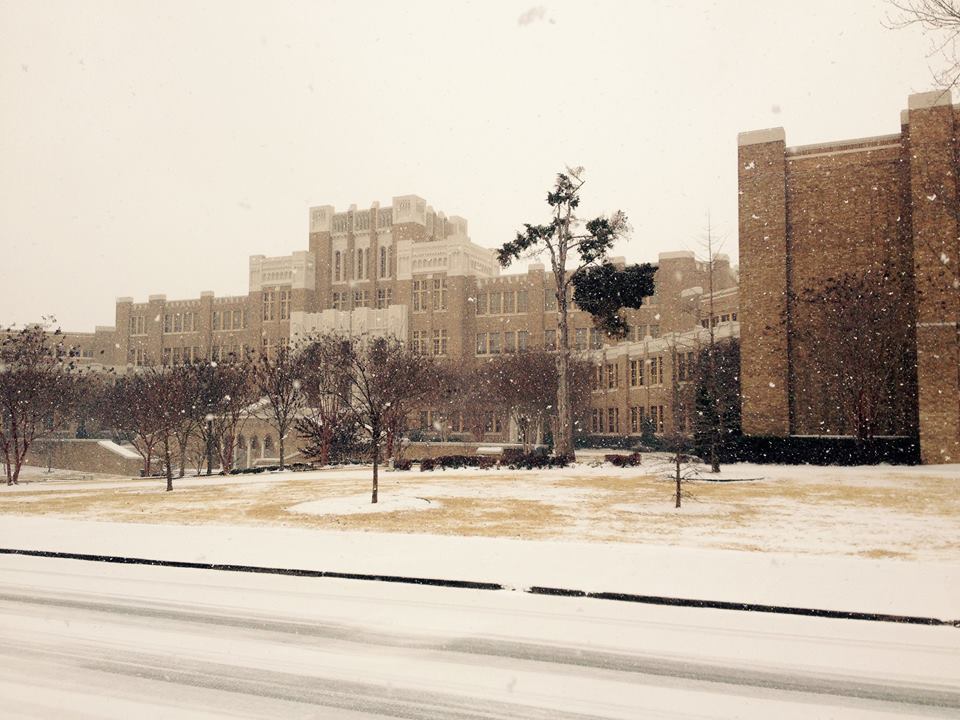
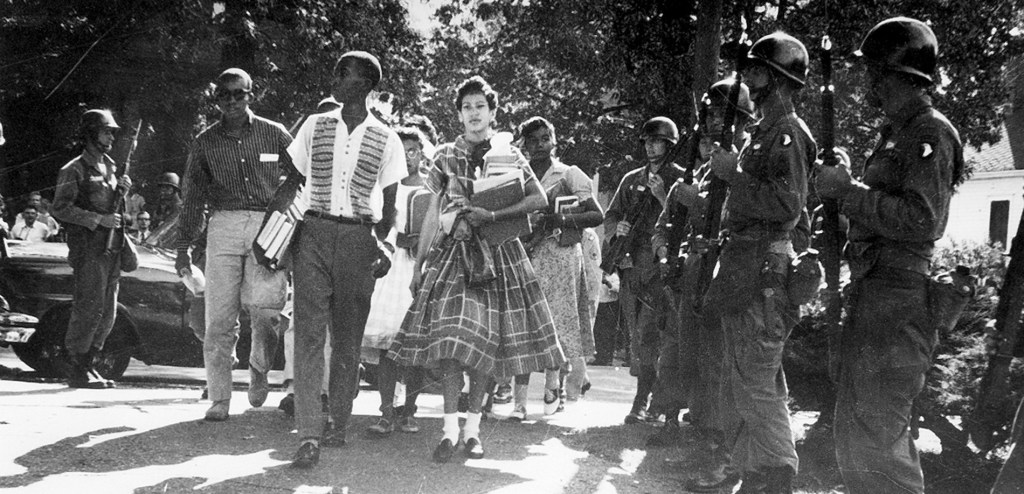
On September 22, 1957, Stanton turned 17-years old. Just over in Arkansas, newspaper headlines were filled with reports of turmoil and distress.[3] The events that boiled over at Little Rock Central High School caught Stanton’s attention. He was no stranger to the power of civic action, nor violent opposition, and so the events of Little Rock may have felt familiar to Stanton if not also distressing. In a nod of solidarity, he considered the so-called Little Rock Nine his “contemporaries,” his “peers.” “I remember it as if it were yesterday,” he said in 2004.[4]
The episode in Arkansas that came to be known as the “Little Rock Crisis” — or, in reference to the nine Black students who enrolled at the school in 1957, “the Little Rock Nine” — was rooted in the 1954 norm-breaking case Oliver Brown, et al. v. Board of Education of Topeka, et al., or, simply, Brown v. Board of Education. In that case, the U.S. Supreme Court ruled that “in the field of public education, the doctrine of separate but equal has no place.”[5] Segregation was thus overturned as unconstitutional. Many states and communities in the South, however, were unwilling to begin the process of integration on their own accord.
It would require a show of federal force to do so.
Little Rock Superintendent of Schools Virgil Blossom expected integration to occur in fall 1957, though he did his best to personally manage the situation through minimal compliance.[6] He oversaw a selection process that whittled down a pool of prospective Black students for enrollment at Little Rock Central to 35. Forces both inside and outside the school, including Blossom’s own intimidating interview process in addition to threats of violence from local segregationists, helped pare the group down to nine.

Throwing sand in the gears, the Mother’s League of Central High filed a legal challenge to cease the process of desegregation at Little Rock Central. The Pulaski County Chancery Court then issued a restraining order against the Little Rock School District, halting integration. But the NAACP filed an appeal, and on August 30 Judge Ronald Davies overruled the order, allowing desegregation to begin again on September 3. He also issued an injunction forbidding anyone from interfering with integration at Little Rock Central. [7]
On September 2, citing threats of violence and, ostensibly, to maintain order, Arkansas Governor Orval Fabus called in the National Guard. Some 250 guardsmen and about a dozen National Guard jeeps posted up outside Little Rock Central. If Stanton picked up the evening edition of the Fort Worth Star-Telegram the next day, September 3, he would have seen the front-page headline: “Only White Pupils Enter Little Rock High School.” The paper reported that a mob of approximately 400 white adults and students gathered outside the school, and “loud handclapping and a few rebel yells occurred when a teenaged boy unfurled a Confederate flag.” None of the Little Rock Nine appeared on campus that day.[8]
The Star-Telegram that also reported similar stories from around the South: one, headlined “Negro Hanged in Effigy at Sturgis, KY,” described the hanging of a Black person in effigy and “a blast of dynamite… in a predominantly Negro neighborhood” in response to forced integration; another, “SEVEN NEGROES FILE INTO CLINTON HIGH,” [caps in original] reported that seven Black students were admitted to Clinton High School in Tennessee, and were “personally shepherded” by principal W.D. Human, who “obviously was attempting to forestall gathering of crowds” and any potential violence.[9]
Daisy L. Gatson Bates, President of the NAACP’s Arkansas State Conference, helped guide the Little Rock Nine through the turmoil. On the morning of September 4, she had the students gather at her house before making their way, together, to Little Rock Central High School. Due to miscommunication, though, Elizabeth Eckford, one of the Little Rock Nine, arrived at the school alone and faced down a mob changing “two, four, six, eight, we don’t want to integrate.” The National Guard stood firm and turned her away. Segregationists surrounded, harassed, and bombarded her with epithets and slurs — Stanton could relate. Eckford managed to make it to a bus station and return home physically unharmed. That same day, the Star-Telegram ran a column headlined “Fabus Is A Fabulous Character.” [10]

President Dwight Eisenhower met with Fabus on September 14 and urged him to change his orders to allow the National Guard to permit entry for the Black students at Little Rock Central. It was a savvy suggestion by Eisenhower: it allowed Fabus to follow Davies’s ruling with minimal risk of blacklash and it offered him political cover by not appearing to have acquiesced to the federal government. Regardless, on September 20 Judge Davies issued an injunction against Fabus directing him to change his orders to the National Guard. Fabus relieved the National Guard but segregationists continued to swarm outside the school. Municipal police escorted the students inside Little Rock Central, but the violence was so great that they were later removed.
On September 23, the day after Stanton’s 17th birthday, Eisenhower declared a national emergency and federalized the National Guard. He ordered 1,200 soldiers from the Army’s 101st Airborne Division from Fort Campbell to escort the students into the school. They arrived on September 24 and did just that. The Little Rock Nine attended their first full-day in the integrated Little Rock Central High School on September 25. “Threats on the students’ lives were common,” remembered Eisenhower, “and, for the next eight months, the Little Rock Nine endured harassment from their peers as well as the Little Rock community.”[11]

The Little Rock Crisis was widely reported in newspapers like Stanton’s hometown Fort Worth Star-Telegram but it was also broadcasted on national television. Images of white segregationist violence against innocent Black children were transmited live into thousands of living rooms across the nation. It’s not clear whether Stanton preferred following the events at Little Rock Central via newspaper articles or TV newscasts, but for him, as a high school student, the Little Rock Crisis was nevertheless etched into his future. He had considered careers in teaching or the physical sciences but as the 1960s dawned, he was increasingly cognizant of growing struggle for civil rights and thought of ways to braid professional aspirations with involvement in the movement. “There were some movements by the government under the Kennedy-Johnson Administration to provide equal opportunity, if you will, for African Americans and other citizens who had been denied full access to employment opportunities in the federal government,” Stanton remembered. “So there were a number of things that were taking place that sort of heightened my awareness as to what jobs I might ultimately seek.”[12]
Over the years, the divisiveness and trauma of the Little Rock Crisis, combined with the passage of time, prompted discussions on how those events would be remembered. Memoirs and film productions offered sometimes clashing perspectives on the episode at Little Rock Central.[13]

It wasn’t until November 6, 1998 that Congress officially authorized Little Rock Central High School National Historic Site, which Stanton characterized as “very close to me,” for the Little Rock Nine “were my peers..” He touted it as one of his dearest accomplishments as NPS Director, a product of working collaboratively with members of Congress to memorialize a jarring but integral scene of American history.[14]
Working with Congress wasn’t always a positive experience for Stanton, even if any pushback he received from lawmakers was little more than political theater. Whenever he had to appear before Congress on oversight issues or was summoned to the White House, he drew strength from “Dr. Mary McLeod Bethune or Frederick Douglass or Martin Luther King or Maggie Lena Walker or the Tuskegee Airmen,” because “if they could prevail then why can’t I?”[15]
[1] Stanton, interviewed by Hamilton, session 2, tape 1, story 12.
[2] Stanton: “The first two as I mentioned earlier was, was Miss Vada Mae Johnson who was a relative, and Robert Blackburn, Jr. was a first cousin” (see: Stanton, interviewed by Hamilton, session 2, tape 1, story 13.)
[3] “3 Negroes Plan Entry in Arkansas,” Fort Worth Star-Telegram, Fort Worth, Texas. September 22, 1957, 1, https://www.newspapers.com/image/639238157/.
[4] Stanton, interviewed by McDonnell, 47.
[5] Little Rock Nine: Minnijean Brown, Elizabeth Eckford, Ernest Green, Thelma Mothershed, Melba Pattillo, Gloria Ray, Terrence Roberts, Jefferson Thomas, and Carlotta Walls; Oliver Brown, et al. v. Board of Education of Topeka, et al., 11 (May 17, 1954) (National Archives Catalog, Dist. file) https://catalog.archives.gov/id/1656510.
[6] Erin Krutko Devlin, Remember Little Rock. Amherst, MA: University of Massachusetts Press, 2017, 15.
[7] Bruce G. Harvey and Deborah Harvey, Witness to Courage: Administrative History of Little Rock Central High School National Historic Site Arkansas, Richmond, VA: Outside The Box, LLC, 2019, 1-12, http://npshistory.com/publications/chsc/adhi.pdf.
[8] “Only White Pupils Enter Little Rock High School,” Fort Worth Star-Telegram, Fort Worth, Texas, September 3, 1957, 1, https://www.newspapers.com/image/638412024/.
[9] Fort Worth Star-Telegram, Sept 3, 1957, 6.
[10] Harvey and Harvey, Witness to Courage, 1-12; “Guardsmen Turn Back Nine Negroes at Little Rock High,” Fort Worth Star-Telegram, Fort Worth, Texas, September 4, 1957, http://npshistory.com/publications/chsc/adhi.pdf.
[11] Harvey and Harvey, Witness to Courage, 1-12; Dwight D. Eisenhower, Notes dictated by the President on October 8, 1957 concerning the visit of Governor Orval Fabus of Arkansas to Little Rock on September 14, 1957. Civil Rights: The Little Rock School Integration Crisis. Dwight D. Eisenhower Presidential Library, Museum & Boyhood Home. DDE’s Papers as President, Administration Series, Box 23, Little Rock Ark (2); NAID #186622. https://www.eisenhowerlibrary.gov/sites/default/files/research/online-documents/civil-rights-little-rock/1957-10-08-diary-notes-faubus-meeting.pdf.
[12] Stanton, interviewed by Hamilton, session 2, tape 1, story 13.
[13] Devin, Remember Little Rock, 89-99.
[14] Stanton counted Arkansas Senator Dale Bumpers among a supporter and collaborator. During deliberations for the appropriations bill for NPS’ FY98 funding, Senator Bumpers sponsored a provision for a Special Resource Study which the Senate Committee on Appropriations included in Senate Report 105-56 on July 22, 1997, pertaining to the Department of the Interior’s funding for the Little rock Central National Historic Site. Bumpers also sat on the subcommittee that voted to advance Stanton’s nomination as NPS director to the full Senate. (Stanton, interviewed by McDonnell, 74; Harvey and Harvey, Witness to Courage, 31; Stanton, interviewed by Hamilton, session 2, tape 3, story 3.
[15] Stanton, interviewed by Hamilton, session 2, tape 3, story 9.
 The Sketch Book of Nick DeLuca
Leave a comment