This is Part IV in a multi-part series about the American West. You can read Part I here, Part II here, and Part III here. It probes our understanding and perceptions of the West as a historical place, or collection of places. It aims to get at the root of why we think about and portray the West the ways that we do. It also indulges the author’s personal fondness for the West.
Slavery
The story of the West Florida Expedition has been told in a particular way. It depicts the Company of Military Adventurers as righteous in thought and purpose, and bedeviled by unreasonable hazards. Telling the story this way was intentional. It obscures the fact that the Company of Military Adventurers sought to build their West Florida settlement on the backs of enslaved people.
We can trace the way this story has been told to a man named Timothy Dwight (1752-1817). Dwight was the scion of a distinguished Northampton, Massachusetts family. He was also related to local gentry like the Stoddard and Edwards families. These families held great sway over the congregations and communities of the Connecticut River Valley.[1]
The Stoddards and Edwardses were also enslavers, as were the Dwights. Timothy Dwight enslaved at least one person we’re aware of. Her name was Naomi. He claimed he purchased her with the intention of freeing her but there’s no evidence he ever did.
Dwight fostered a reputation as a writer, theologian, and educator. He rose to national prominence as the president of Yale College where he helped spark the Second Great Awakening, a protestant revivalist movement that swept the budding United States.
As the first person to write a history of the West Florida Expedition, Dwight had free reign to shape the narrative however he wanted. The multi-volume work in which Dwight published his account of the West Florida Expedition proved to be a seminal addition to the American canon. Published in the early 1820s, it was one of the earliest works to meld together history, folklife, language, and landscapes. In doing so, it gave voice, style, and imagery to an emerging American cultural identity.
Park Service.
Perhaps it’s not surprising that he made no mention of the at least 13 enslaved people who were bound to members of the West Florida Expedition. Slavery, especially as it related to elite Northern families like the leaders of the Company of Military Adventurers, threatened to tarnish the fragile, new national identity he helped create.
Dwight’s reputation lent credibility to his historical writing, and historians who followed him cited his work as legitimate source material. I haven’t seen any sources, for example, that identify Phineas Lyman, proprietor of the Company of Military Adventurers and leader of the West Florida Expedition, as an indenturer and enslaver. Lyman indentured at least two seven-year old girls, both bound as servants to the Lyman family until they turned eighteen. Dwight omitted this.
On November 16, 1748, the Boston overseers of the poor and Suffolk County Justices of the Peace placed seven-year old Mary Brown, “a poor child,” in the custody of “Pheneas Lyman of Suffield… and his wife and heirs.” The Lymans would provide Brown with food, clothing, washing, and lodging, and they would teach her the “art & mistery of a spinster” and to read and write in exchange for her servitude, piety, and strict obedience.
Under similar circumstances on May 2, 1759, town and county officials placed “a poor child named Ann Ingersoll,” almost seven-years old, in the custody of “Phineas Lyman of Suffield… and his wife and their heirs.” Likewise, the Lymans would provide Ingersoll with food, board, and other necessities while she learned “the art[,] trade[,] and mystery of knitting[,] sewing[,] spinning[,] and all other Branches of good Housewifery,” as well as reading and writing. She, too, was obliged to submit to the Lyman’s moral and behavioral rules of conduct.
It’s more than likely Lyman also enslaved people. His wife Eleanor came from a slaveholding family, which isn’t all that surprising when we realize that she was Timothy Dwight’s aunt. A Dwight family genealogy recounts that Eleanor possessed “a female slave” who “every evening [sat] by her mistress’s bedside, holding the Bible in one hand and a candle in the other, for her to read its pages.” But it’s unclear if this enslaved woman was purchased by her father and bequeathed to Eleanor in his will, or if Lyman made the purchase for Eleanor. That same family genealogy mentions that Lyman himself enslaved a man called Old Tie. I haven’t uncovered any records that corroborate the claims made in the genealogy but it does indicate the Lymans and the Dwights were intimately familiar with slavery.
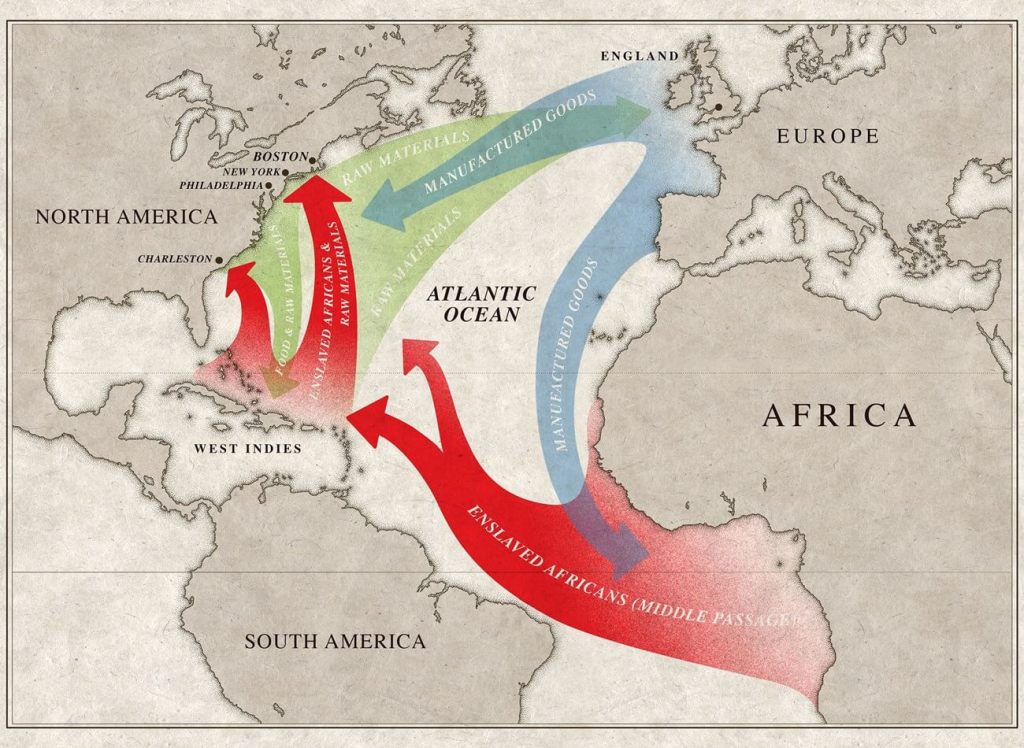
It’s important that we understand this dimension of the story because it punctures a fallacy that exists even to this day: that slavery did not exist, or barely existed, in the North. Further, it discredits the notion that Southerners were the only ones trying to push slavery further southward and westward. Indeed, compared to our collective memory of the antebellum American South, slavery in the North was a much smaller enterprise by population. But slavery was still a vital cog in the economic machine that powered Northern trade and industry. The West Florida Expedition, thus, was an attempt by New Englanders to expand the institution of slavery into the Mississippi Delta and to generate wealth by slave labor.[2]
We know there were at least 13 enslaved people as part of the expedition because of a man named Mathew Phelps. Phelps was from Connecticut and he visited West Florida in the early 1770s before deciding to settle there permanently. He later published a memoir of his travels. In it he recorded that Lyman and his son Thaddeus brought “eight slaves,” the Dwight family brought “three slaves,” and William Hurlburt and Elijah Leonard of Springfield, Massachusetts, brought “a number of slaves.”[3]
In the decades to come, West Florida and the Mississippi Delta were passed back and forth between imperial sovereignties. The British ceded control back to the Spanish, who offered a haven to people enslaved in the new United States. But when the Americans took over after the Revolution, they reinstituted slavery and the region became the center of the American slavocracy at the hub of which was New Orleans.
Death
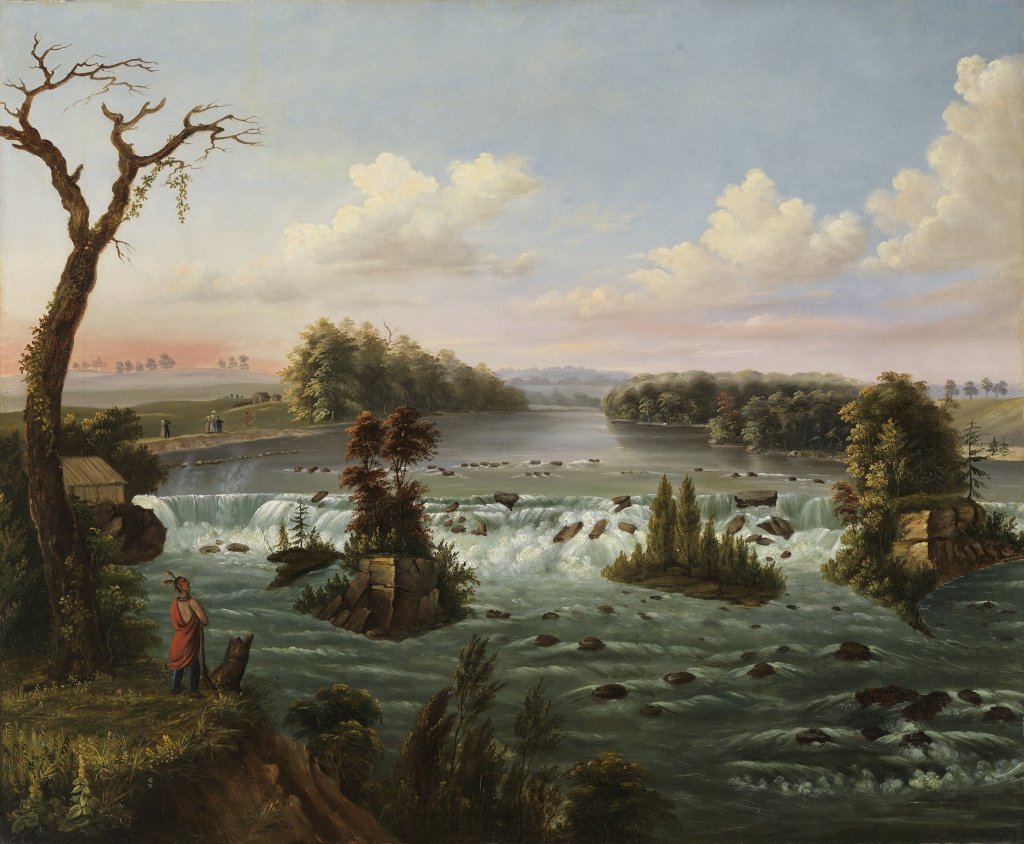
Phelps’s memoir also depicts the dangers people faced on the way to West Florida. The journey was perilous for everyone, free or enslaved. British warships harassed colonial vessels, shoals and reefs were treacherous to navigate, provisions had to be rationed when resupply was impossible, and illness was prevalent with death in tow.
After reaching New Orleans in September 1774 and proceeding up the Mississippi River, Phelps contracted a fever. So too did his wife Jerusha, his daughter Abigail, his daughter Ruth, his son Luman, and his son Atlantic. Abigail was the first to succumb to illness and Phelps “was obliged to inter her remains the next day, with my own hands, as decently as I could.” Ten days later, Atlantic died and Phelps “once more had to dig the grave, and inter the remains of an infant peculiarly dear to me, by the side of his once lovely sister.” Meanwhile, fellow passengers all around them were also dying of disease. In November, Jerusha died, too.
Grieving and still sick, Phelps and his remaining two children, Ruth and Luman, and a hired deckhand, proceeded up the Mississippi River beyond Natchez to the Big Black River. Here, they encountered one of the Mississippi River’s infamous whirlpools. What happened next is the stuff of nightmares.
The boat was pulled into the whirlpool and the deckhand was able to jump overboard and swim to safety. Phelps then managed to rope the boat to a tree which stuck out “nearly horizontally” from the riverbank. He then slid across the rope onto the tree and tied the rope and boat secure enough for his children to follow. But the roots of the tree gave way from the riverbank:
“the boat broke from her fastening, filled and turned bottom upwards, while I clung to it for a few moments, and heard my dear babes, for the last time calling daddy, daddy, as supplicating assistance from an earthly parent, when their heavenly Father had called them home to him-self, and bid the rolling billows wast them into peace…
… My lovely babes sank both together to the shadess of death, while I was preserved almost miraculously, by being enabled to swim several rods, a skill that I had never before, nor have at any time since, been capable of exerting…”
The deckhand told Phelps that Ruth and Luman “slipped off into the water, locked in each other’s arms, still calling upon [Phelps] for help, and met their melancholly fate together.”
The devastations Phelps endured were but a prelude to the ones looming over the remaining survivors of the West Florida Expedition. In his telling of the story, Timothy Dwight never mentioned Phelps or his family. He also never mentioned any of the enslaved people or their fates. To Dwight, institutional catastrophes like slavery and environmental ones like disease or whirlpools had no worldly explanation. Including them in the narrative would contradict his depiction of the West Florida Expedition as a noble and virtuous endeavor. Thus, they were largely omitted.
As we’ll see in Part V, in order for Dwight to make sense of all the traumas and tragedies that befell the Company of Military Adventurers — which, to him, were so cataclysmic that they defied logic, reason, and a just God — he had to create villains.
Part V to follow.
[1] These and other families so dominated social and political life in the Connecticut River Valley that historians have since referred to this elite group as the River Gods.
[2] Other enslavers in the region included Robert Farmar, Royal Governor of West Florida, whose prosperous plantation by the time of American independence a decade later was the site of at least 50 enslaved people.
[3] “A number of slaves” implies more than one, which is why I say at least 13 enslaved people were bound and trafficked to West Florida. It was most likely more.


Leave a Reply