This piece was originally published in The American Historian and has been republished on this site with their permission. You can view the original here (member log in required.)
The history of who gets to interpret America’s past is inseparable from the history of who gets to work for the National Park Service. The NPS has historically relied on many seasonal rangers to function. These workers are, by definition, transient; their positions may be temporary, but they shape a lasting institution. As the NPS workforce diversified over time, so did the agency’s interpretive frameworks. The dynamic reveals a paradox: the seasonal model that leaves employees at risk today has also provided pathways for people historically excluded from federal service to work for the NPS. The park service’s role in communicating complex histories is not new, and the history of NPS interpretation and seasonal work are intertwined.
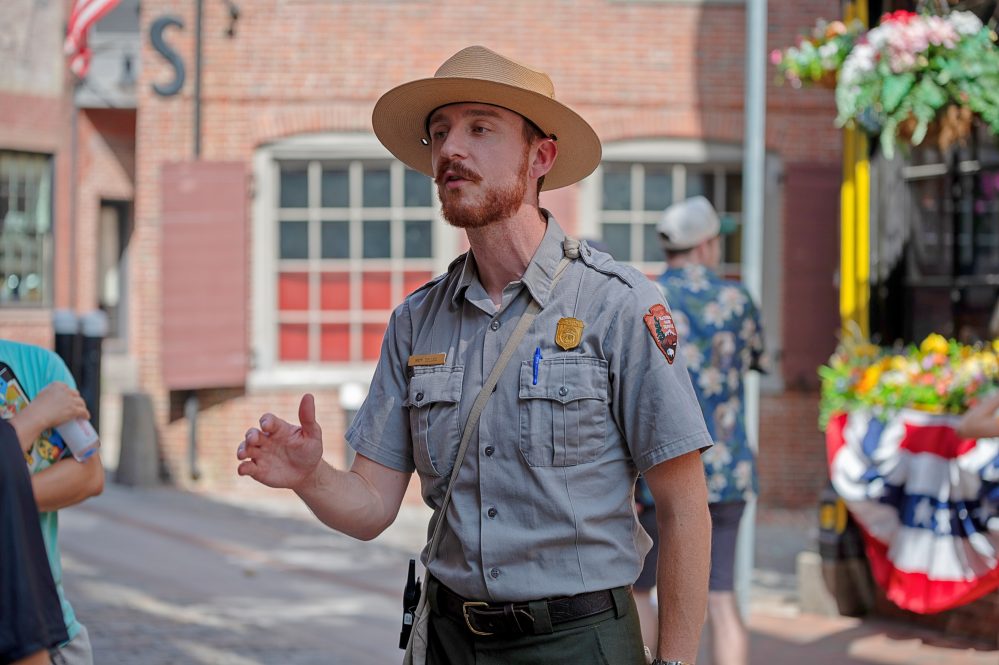
These rangers’ work and presence complicated historical narratives, just as seasonal NPS workers continue to do. When I was a seasonal ranger for the National Park Service, my primary job was to interpret the past for the public. At NPS’s Boston African American National Historic Site, where I worked for three seasons, we rangers focused mainly on the American Revolution and the U.S. Civil War. Visitors tend to have a simple and straightforward sense of how and why these crises happened. It was my responsibility to illuminate the nuances of these stories, challenging people to look at these events from new and sometimes uncomfortable perspectives.
Like the workers themselves, the histories of seasonal park employees and the complicated national stories they are charged to communicate are tenuous and have become even more so in recent years. Through executive orders like the March 2025 “Restoring Truth and Sanity to American History,” the White House is attempting to distill the U.S. historical narrative into one that promotes a mythologized national exceptionalism, foregrounds white men, and silences women, people of color, and the LGBTQ community. The current administration also encourages the public to identify park sites whose interpretation doesn’t conform to its views. Seasonal rangers who resist these directives are vulnerable. Should they defy the administration, they have no job security, no union protection, and little recourse if they’re dismissed. If they yield to these demands, they jeopardize the integrity of their content and their own professional integrity by presenting a flawed history to the public.
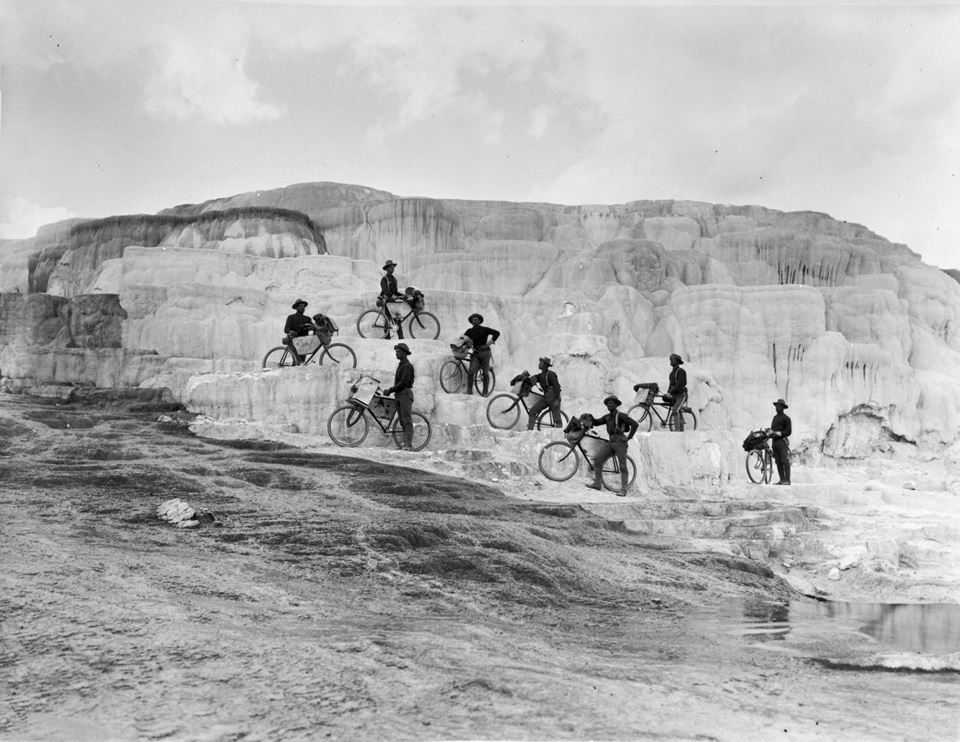
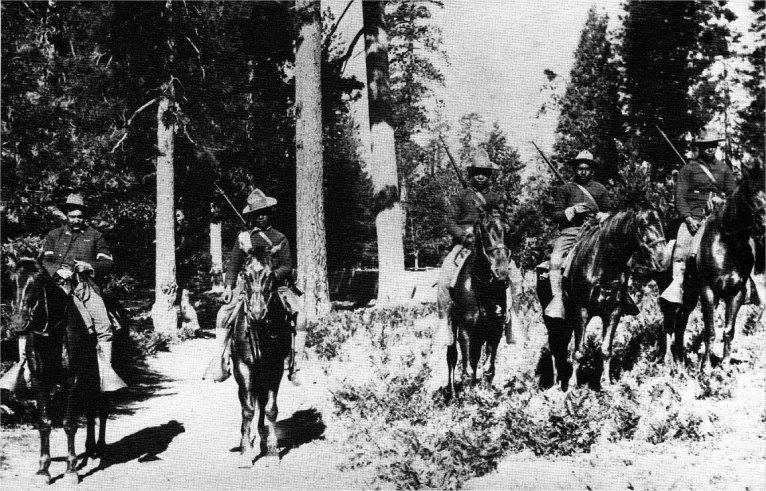
Yet, the very history of seasonal workers defies the simplistic narratives dictated from the White House. From the outset, the seasonal model was no accident. It was a strategy developed to accommodate the cyclical rhythms of nature, tourism, and federal appropriations. The government relied on the U.S. Army for early park stewardship; there was no civilian office with the resources or manpower to protect parks from tourists, poachers, and developers. In response, the army deployed all-Black cavalry and infantry regiments to parks like Yosemite and Sequoia. History remembers them as the Buffalo Soldiers. Their periodic rotation between winter military duties at the Presidio of San Francisco and summer patrols in the Sierra parks reflected the same demands that underpinned the later seasonal model.
The 1916 Organic Act transferred oversight of national parks from the army to the new NPS. Yet it wasn’t until the modern civil rights movement that the NPS hired Black park rangers. In 1958, Booker T. Washington National Monument hired James Holmes as the first Black NPS ranger. Four years later, Interior Secretary Stewart Udall recruited Black seasonals to serve at park sites nationwide. Among them was Robert Stanton, Grand Teton’s first Black ranger, who President Bill Clinton later appoint as the first Black director of the NPS. Under Stanton, the interpretive focus became more inclusive of Black history. Stanton demonstrated that Black seasonals could climb the NPS ladder and reshape the agency from the top.
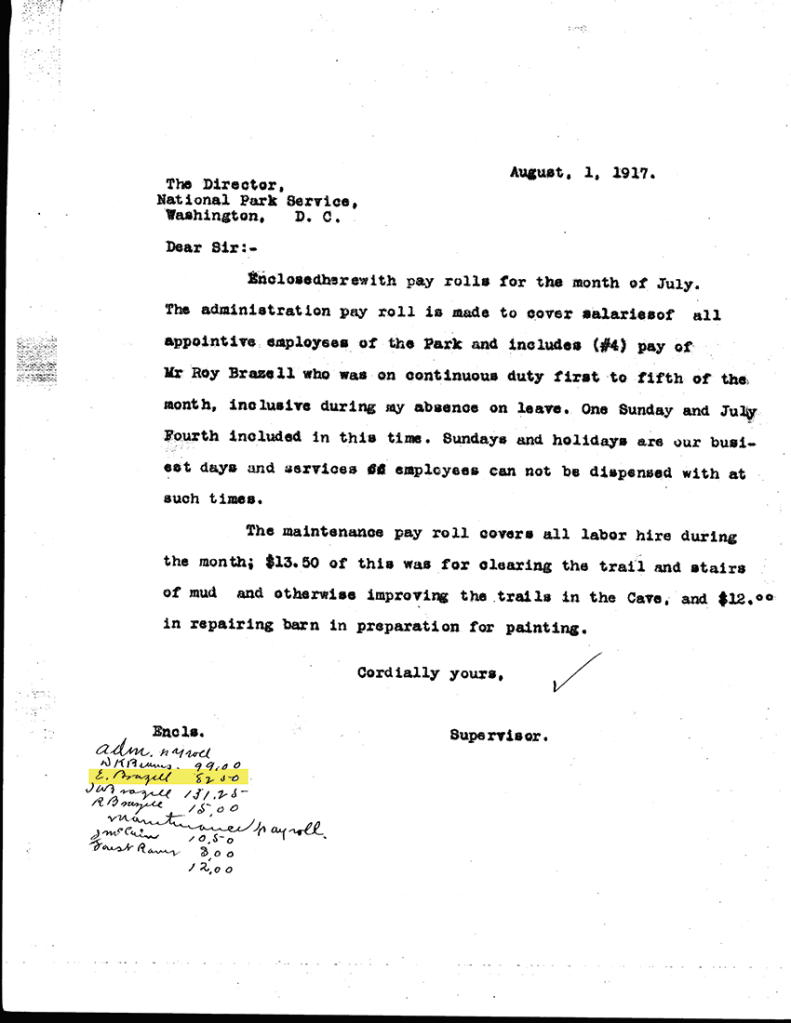
The gender dynamics of these seasonal workers were also quite complex. The first NPS deputy director, Horace Albright, had sought to mold the agency into what he described as a “He Man force.” Albright and his superior, the first NPS director, Stephen Mather, envisioned a gendered NPS workforce composed of rugged, intelligent, and helpful men, following in the mold of hypermasculine figures like Theodore Roosevelt. “These men of the mountains have become keen students of human nature,” wrote Mather in the introduction to Albright’s book Oh, Ranger! “They are a fine, earnest, intelligent, and public-spirited body of men, these rangers.”[1] At some park sites, though, there simply weren’t enough men. Esther Brazell became the first woman NPS ranger when her father, Wind Cave superintendent Thomas Brazell, appointed her in 1916, with Albright’s reluctant approval. She was one of two seasonals at Wind Cave that year. Brazell led cave tours and provided what the park’s 1917 annual report described as “general service.” She resigned that year due to health reasons, but when she recovered, Albright encouraged her father to hire a man in her stead. Brazell didn’t fit his masculine ideal. It didn’t matter that the Rapid City Journal had praised her as “the efficient guide at Wind Cave.”[2]
Almost eight months after the Organic Act, the U.S. entered World War I. The Great War caused a national labor shortage, which affected the NPS. Visitation numbers, however, continued to rise. Once discouraged by officials like Albright, so-called “rangerettes” were now in demand. Yosemite superintendent W. B. Lewis hired Clare Hodges as a seasonal ranger in 1918. At Mount Rainier, superintendent Dewitt Raeburn, unable to find a “suitable man for issuing permits at entrance,” hired Helene Wilson. That year the NPS also appointed women as seasonals at Glacier, Sequoia, and Yellowstone National Parks.[3] Albright’s “He Man force” was more a fleeting ideology than a practical system.
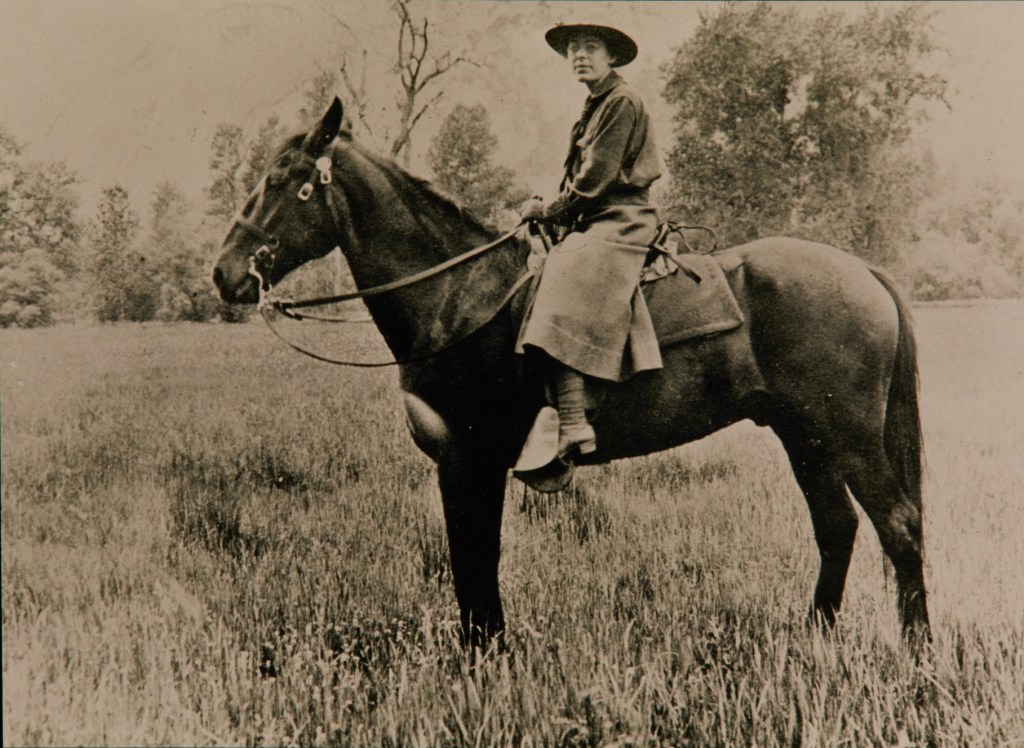
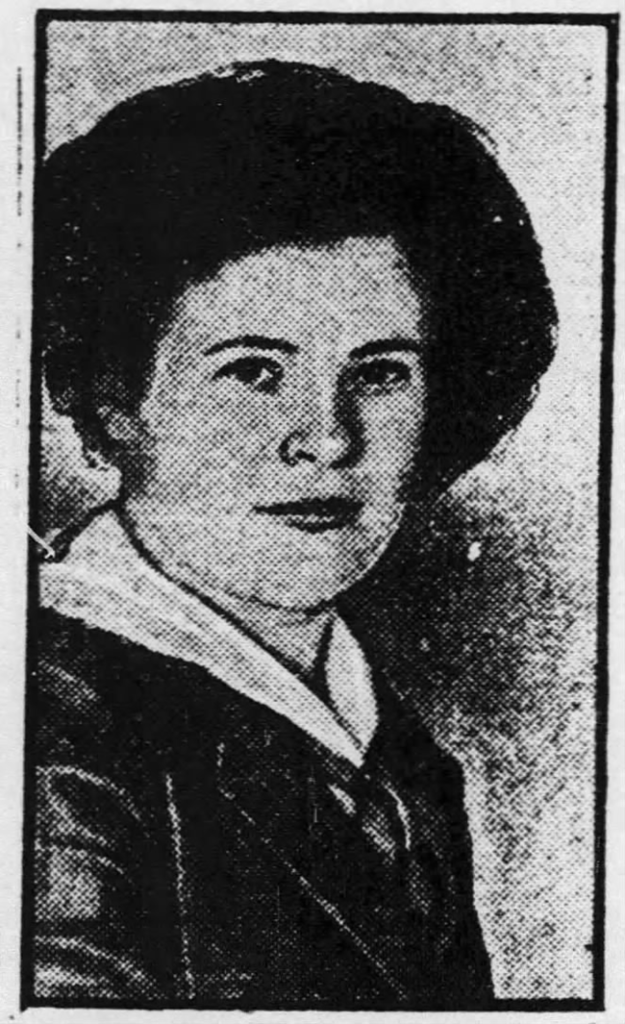
Seasonal employment did more than provide the NPS with temporary labor. It created openings for people the federal workforce had otherwise excluded. Those openings changed who worked for the NPS and what the agency understood U.S. history to mean.
Those openings expanded in the 1920s and 1930s, when the NPS hired its first documented Hispanic and Indigenous rangers. George Meléndez Wright joined the ranger staff at Yosemite in 1927. As a biologist, Wright helped augment the NPS’s mission, elevating natural science and wildlife management as major agency priorities. His cultural heritage and bilingualism also positioned him well to mediate between the NPS and peoples of the West and Southwest. For instance, he translated the recollections of an Ahwahneechee chief’s granddaughter as she chronicled life in Yosemite Valley before U.S. occupation. When Wright died at thirty-one, he had just finished surveying the borderlands for an international park with Mexico, later authorized as Big Bend National Park.
Francis X. Guardipee appears in the record as one of the first Indigenous park rangers. Guardipee was born on the Blackfeet Reservation in the shadow of Glacier National Park, where he worked for sixteen years. Guardipee broadened the idea of who could be a ranger and posthumously reclaimed a sense of authority over an environment from which Indigenous peoples had been dispossessed by Americans: after Guardipee died, the U.S. Board of Geographic Names named Chief Lodgepole Peak in Glacier after him, evoking the name Blackfeet elders bestowed on him in 1914.
The NPS eventually hired both Wright and Guardipee as permanent staff. Earlier seasonal rangers, including Black men and white women, who came before them blazed a trail that helped make their NPS careers attainable. These early seasonals equipped the NPS to grow and serve an increasingly diverse audience. Seasonals from various backgrounds brought perspectives and experiences that added new dimensions to interpretive approaches. And they opened pathways to federal work for people from marginalized communities.
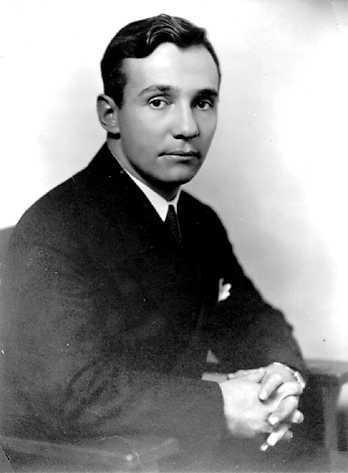
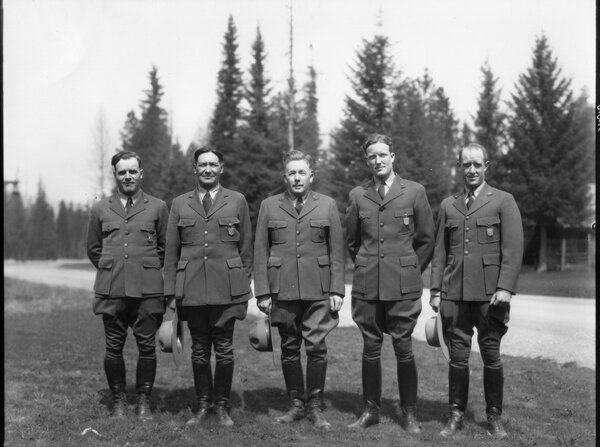
When I interpreted stories about the American Revolution and U.S. Civil War, I incorporated urban landscapes and the built environment, power dynamics between white people and people of color, contributions of women, and the disturbing truths about the institution of slavery and American colonialism. I tried to illuminate the overlooked contradictions and hypocrisies; I tried to make the historical past relatable, accessible, and human. The many rangers who came before me laid the foundation for this kind of work. We are the beneficiaries of their contributions.
My work wasn’t always well received. Some visitors pushed back, taunted me, and accused me of being “woke.” At Faneuil Hall, the “Cradle of Liberty,” some confronted me about why I was speaking about abolitionists, suffragists, and social reformers in Boston while only briefly mentioning better-known national heroes like John Hancock or Paul Revere. But history is a discipline that’s constantly evolving. It always percolates through the filter of the present moment. It’s important for people to be skeptical of what any administration tries to feed them. This White House wants a simplified and sanitized U.S. historical narrative, but this runs counter to the very history of those charged with delivering this narrative, erasing the complex history of seasonal employment. The seasonal model enabled rangers to inject fresh ideas into an institution that has created opportunities for people excluded from federal service for over a century. It’s important for the American public to back their rangers by advocating for stronger workplace protections, more interpretive authority, and a ranger force that better reflects the American public. Seasonals may come and go, but their work endures.
Featured image: the author leading a history tour in Downtown Boston for the National Park Service / Image via Mike Bozio, NPS
[1] Stephen Mather, foreword to Oh, Ranger! A Book about the National Parks, by Horace Albright and Frank J. Taylor, (1928), vii.
[2] On Esther Brazell, see “The Winds of Change: Finding the First Woman Ranger,” NPS, https://www.nps.gov/articles/000/the-winds-of-change.htm#onthisPage-1.
[3] See, “Rangers, Not Rangerettes,” NPS, https://www.nps.gov/articles/000/rangers-not-rangerettes.htm


Leave a Reply